
Category: Health

  • How to Fall in Love With Your Pumping Heart (Or: How to Love Cardio Exercise)

    How to Fall in Love With Your Pumping Heart (Or: How to Love Cardio Exercise)

    The world is full of articles, posts, and unsolicited comments about why to exercise—usually focused on long-term physical and mental health benefits.

    But just like music, wine, or good food, cardio exercise is worth falling in love with for its own sake.

    Here’s how.

    History

    The great Aldous Huxley thought people find God in their muscles. Our ancestors found transcendence dancing together in the light of bonfires. We still do. At a rock concert, mosh pits are a modern bonfire—ecstatic movement in a new form.

    This is a first principle: People want to exercise together, to music.

    No less a luminary than Barbara Ehrenreich has written a 250-page book cataloguing the human need for movement. She explains: Dionysus, the god of dance “was not worshiped for ulterior reasons (to increase the crops or win the war) but for the sheer joy of his rite itself…he is the ecstatic experience that…defines the sacred and sets it apart from daily life.”

    Exercise is an opportunity to connect with that sacred realm.

    Science

    A true maximizer is going to want more tangible assurance than my fanciful historical musings. Fair enough.

    The data are everywhere: cardio exercise lights up the brain’s reward circuits almost instantly. A Google search for “exercise and mood” will get you to plenty of sources explaining why exercise—specifically cardio exercise—has an immediate impact on mood. If you want a whole book, try Spark: The Revolutionary New Science of Exercise and the Brain by John J. Ratey and Eric Hagerman.

    Roadmap to Falling in Love

    Here are five predictable and proven strategies for maximizing the euphoric feeling of cardio exercise, rooted in history, science, and my own experience:

    1. Turn the radio up (for that sweet sound). Listening to fast music that you love turned up loud is the single most important step to loving cardio exercise. This is the core of what our ancestors were after, and what our hearts and bodies still crave. We can now play any song, any time, anywhere, as loud as we want, without disturbing others—what a world!
    2. Vary the pace. Our bodies and hearts want to vary the pace. My running club recommends three 20 second all-out sprints at the end of a run. You can do speed intervals on any programmable cardio machine. I personally love (and also hate) short intense 30 second intervals on the Assault Bike at my gym, where your arms and legs are both pulling as hard as they can. There are plenty of High Intensity Interval Training (“HIIT”) workouts online that achieve the same thing without any equipment. Those short bursts need to be infrequent to avoid burnout. But peppering them into an overall cardio strategy once a week is transformative for mood (and also happens to be one of the healthiest things you can do for the long term—but that isn’t what we are here for).
    3. Go outside. Human beings are meant to be outside far more than we usually are today. Here is a good podcast about the benefits of being outside. But if you’re like most of us, you don’t need a podcast to tell you that it feels good to be outside. We need Vitamin D, birdsong, and nature to be truly healthy. So when you can, do your exercise outside.
    4. Get together. Movement and community somehow fit together. There is something powerfully transformative in a group dance class. I don’t like to talk when I’m exercising, but I love knowing that my friends are out there at the same trail, going at their own pace. And I love that moment of connection when I see someone else also struggling and we say something short to encourage each other. If you don’t have any fitness friends now (I didn’t when I started), you will get them, and they’ll become some of your strongest bonds.
    5. Let your mind go. So much of our lives are spent directing our attention. Exercising is one of the few places where we can simply let our minds go. For me, cardio exercise is the opposite of meditation. I’m not trying to turn off my mind, or direct it to my breath or some other particular aim. Instead, I’m letting it wander wherever it goes, sometimes into imagination and daydreams, sometimes something far less focused. The rest from directing my mind is a core part of the experience.

    Getting Over Yourself

    Worrying about how you look, and how well you’re doing, is a barrier you just have to get over. Unless you’re a fitness model or an Olympic athlete, it just doesn’t matter.

    My running gait is awkward, and despite running for years I’m still lucky if I come in under a 12-minute mile in a race. My running partner, on the other hand, has perfect form. In candid race photos he looks like a god of running, and I look like a mess. It just doesn’t matter.

    There is no shame or embarrassment in cardio fitness. When we are doing heart-pumping exercise, we are coming as close as many of us ever will to the sacred Dionysian rites Ehrenreich catalogues.

    The joy is the rite. That’s what you’re falling in love with. Let everything else go.
  • Get Out of Your Head and Into Your Body (Or: You Are Not a Brain in a Vat)

    Get Out of Your Head and Into Your Body (Or: You Are Not a Brain in a Vat)

    I used to think of myself as a brain in a vat — fully engaged, hyper-productive, floating on adrenaline, caffeine, and sugar.

    But in reality, none of us is just a brain. We are bodies. And I would predictably crash.

    One particularly hard morning, I was overwhelmed by stress. I didn’t know how to keep putting one foot in front of the other. A friend said something with enough genuine sincerity to get my attention: “You have to find a way to get out of your head. Exercise, meditation — you need something.”

    We were two weeks away from a big arbitration, working around the clock. But that night, I did 20 minutes on the rickety elliptical machine at the tiny gym in our office building. I felt better than I had in months.

    I clung to exercise like a lifeline, and pulled myself up, inch by inch.

    Making the long-term into the short-term

    If the benefits of exercise feel far away, you’ll never do it.1 The trick is to stop exercising for the future. Do it for right now.

    My friend’s advice was to do just that. And it triggered my “renaissance period.”

    I started by hiking the little mountain trail behind my house — which I came to think of as “my beloved Shaw Butte” — to see the sun rise.

    It’s five miles exactly from my front door to the top of Shaw Butte and back. In the hot Arizona summer, the time to start that hike is before the sun comes up; I’d be at the top by 5:30 a.m., and back home in time to get to work by 9:00 a.m.

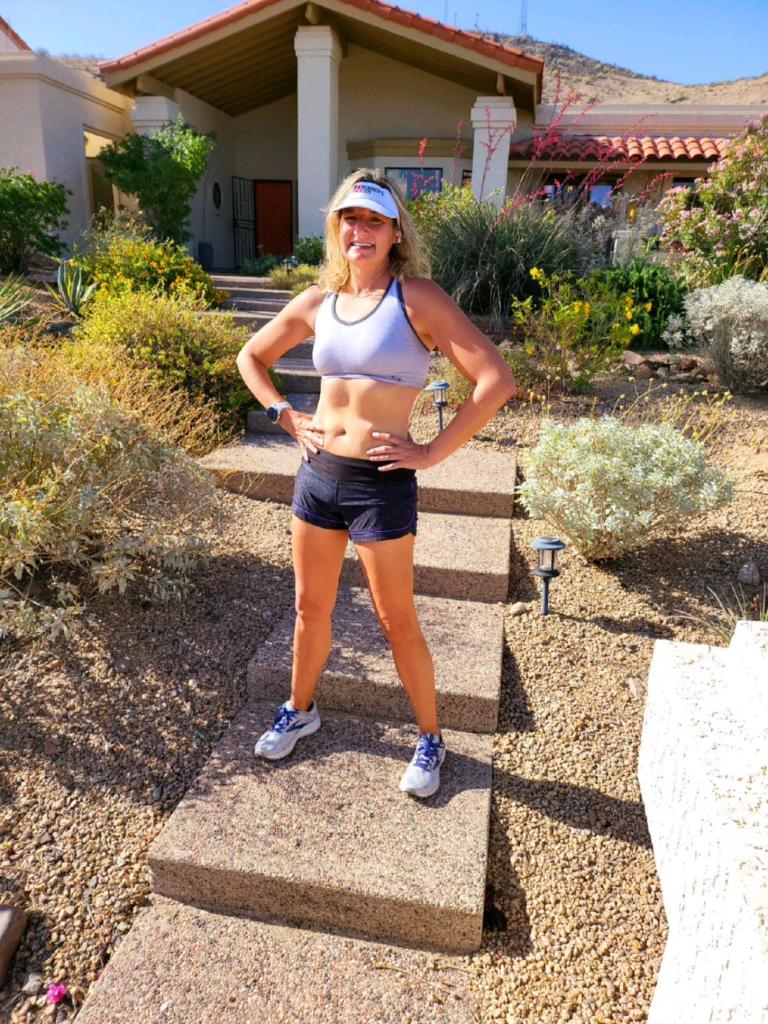
    After a few months of hiking Shaw Butte most mornings, I started seeing changes in my body. I wondered at first if they were some kind of tumors. No, not tumors, muscles! I wanted more, so I started weight training, and eating better.

    In six months, physical changes were noticeable.

    No one ever told me it could be this easy, or that it could feel good.

    And the impact ricocheted through every aspect of my life. My husband started going to the gym with me. New friends became the core of my community and introduced me to new interests. Things I’d always loved – like gardening and hiking – got easier.

    Staying connected to the physical in a virtual world

    Then, the pandemic hit. I worked harder than I ever had before, routinely billing more than 300 hours a month.

    Sitting down at the desk in my living room—cluttered with three monitors, a laptop, and a cell-phone on speaker—felt like plugging into the matrix.

    For most lawyers, the virtual world still hasn’t let go. Finding ways to stay connected to the physical world is even more critical.

    What to expect in this Health section

    The Health section of this blog is about reclaiming your body—not as a long-term project, but as your lifeline right now.

    You’re not just a brain. You’re a whole human. You deserve to live like one.

    Start here. Subscribe for more to come.

    Footnotes:

    ¹ In finance this is called a high time preference, the natural desire to reap rewards now and put hard things off. It is perfectly rational. No extra minute is guaranteed to any of us. See here for more about how this can play out for finances.↩︎

  • The Joyful Maximalist’s Unconventional Guide to Losing Weight and Keeping It Off

    The Joyful Maximalist’s Unconventional Guide to Losing Weight and Keeping It Off

    I started putting on weight in my mid-twenties, after graduating law school and starting a full-time job. My doctor said it was normal—something that happens as you get older, especially in a sedentary profession.

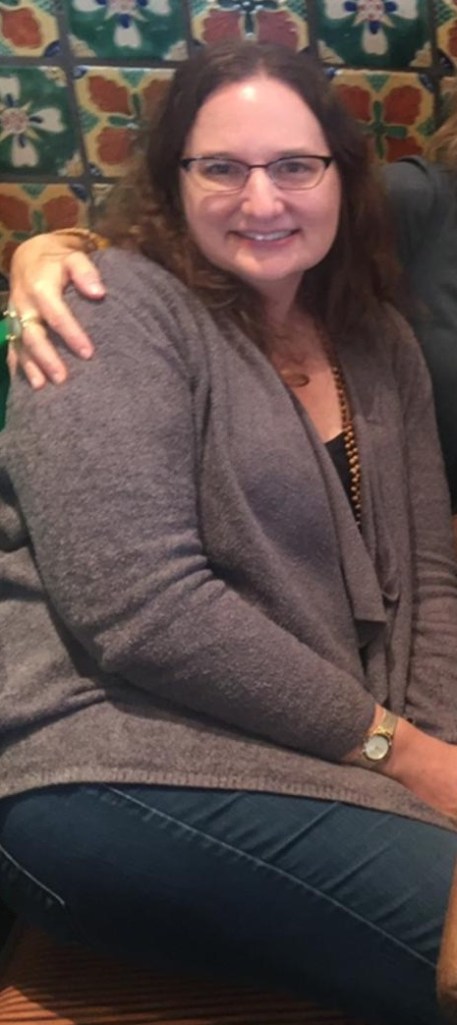
    For a long time, I accepted that as the inevitable reality. Eventually, I got close to 200 pounds.

    I didn’t try to lose weight at first. I was just exercising and eating better to feel less stressed. But when I started seeing changes in my body, I wondered how far I could take it.

    I ended up surprising myself. I lost 65 pounds and have kept it off for six years—without returning to dieting, counting calories, or weighing myself.

    I’m not a doctor or an influencer. I don’t have anything to sell. But I know what worked for me — and some of it surprised me.

    Here are 10 insights that made the difference for me.

    1. Lean protein is powerful.

    I used to be constantly hungry. I made huge servings of vegetables, but I’d be starving immediately after eating.

    I enrolled in a formal nutrition program that used “macros” – targets for grams of fat, carbs and proteins. After my first breakfast on the plan, I was surprised to find myself feeling full for the first time in a long time, The key ingredient I’d been missing: lean protein.

    Lean proteins are foods that are mainly protein — egg whites, shrimp, fish, and chicken, as opposed to mainly fat or mainly carbs. I had been eating plenty of foods with protein — cheese, lentils, beans — but none of those were lean proteins. I hadn’t realized the difference.

    Adding lean protein was transformative. I felt full on less food.

    2. Eating carbs, protein and fat together is more nourishing

    You may be reading Number 1 and thinking: “Excellent, I will just eat lots of lean protein.” It doesn’t work like that. The most filling and nourishing meals involve a combination of lean proteins, carbs and fats. Eating six shrimp is less satisfying than three shrimp on sautéed spinach with a handful of peanuts. Our bodies seem to respond best when we feed them everything they need at once.

    3. Seasoning changes everything

    Most of the things that I had been using to make my food delicious — store-bought fat- or sugar- based sauces, cheese, etc. — had far too much fat or carbs to fit my “macros.” I switched to using seasoning and vinegar-based hot sauces with few calories (like Tabasco) to make my food delicious. This became my formula:

    4. Decline the supplements

    People will try to sell you supplements, shakes, or fizzy drinks to fix your mood, make you less hungry, or replace something you are missing. I suggest declining all of this. We’re built to get nutrients from food—not powders, pills, or fizz. 1

    5. Real food beats fake food, but fake diet food will do in a pinch

    Many “diet” foods started as something real that has been processed beyond recognition— organic chickpea chips, pea-protein puffs.

    I relied on some of these “macros-friendly” options when I was losing weight; sometimes you just need something convenient. But they’re crutches. Once I was done losing, I let them go.2

    1. Rigid programs can help you lose weight

    I used a formal nutrition program that tracked macros – grams of carbs, fat and protein — at each meal. Even 1/4 of a protein bar, or a few extra baby carrots, had to be tracked.

    I realized at the time that this hyper-focus was a bit absurd. But there was value in having objective targets. Human physiology is built to maintain weight in times of famine. To lose weight, we’ve got to get in a calorie deficit – which feels a bit unnatural. The result? Intuitive approaches are great for maintaining weight, but don’t work as well for losing it.

    1. Joy-based eating can keep weight off

    Here is something important: The rigid program should be temporary. Once you’ve accomplished your goal, give it up.

    Many formal weight-loss programs end by prescribing a “maintenance” phase that is the basically the same as the “weight loss” phase, with a few more grams of carbs and fat, or calories, tacked on. That kind of tracking as a permanent way of life is joyless. I refuse to buy into a world where an extra-large California avocado—or my mom’s homemade pound cake—counts as part of the 20 percent “un-clean.”

    For me: Initial weight loss was about rigidity, but real life is about eating for joy.

    1. Nutrition is the key to losing weight; exercise is the key to maintaining.

    You don’t lose weight through exercise. But you do keep it off that way. Here is why. Building muscles increases metabolism; our bodies needs more energy to maintain muscles than to maintain fat. Combined with the calorie-burning effect of cardio exercise, this gives people the buffer they need to keep weight off without resort to soul-depleting rigidity.3

    To be clear: I whole-heartedly reject “earning” food with exercise. Exercise is a joy which needs no purpose. Good food is a joy which needs no justification. But adopting exercise as part of a joy-filled life makes it easier to eat delicious, whole food as part of a joy-filled life.

    1. Losing weight was easier than I thought.

    I’d heard all the grim statistics and didn’t expect to succeed. I certainly won’t say it was easier. But losing the weight turned out to be easier than I expected—once I had the right structure. I wish my younger self had understood that fitness and good food can support a life of abundance and joy, rather than living in tension with that good life.4

    1. Losing weight is not about looking great.

    I won’t lie: it was awesome to hear people say I looked amazing after I lost weight. But I was a middle-aged lawyer, not a professional model. I didn’t, and don’t, need to look great (much less thin) to have a great life. Fleeting compliments are nice, but are nothing compared to the joy of discovering what your body can do. As with most good things, the impact of that rippled through my whole life. I found a community of fitness-minded friends, took on hobbies I never expected, lowered my work stress—and became a happier person.

    Footnotes

    ¹ I lost weight before the new class of weight-loss drugs like Ozempic became widely available. I don’t have personal experience with them and can’t speak to their risks or benefits.

    ² Chris van Tulleken’s excellent book, Ultraprocessed People, documents the devastating impact ultraprocessed food has on our bodies, health, and culture. Unlike me, Tulleken is an actual expert – a medical doctor – who could survive a Daubert challenge. As all good trial lawyers know, a scientific expert with a British accent counts double.

    ³ Harvard Health Publishing. (2021, November 1). Muscle mass: A key to staying healthy as we age. Harvard Medical School. https://www.health.harvard.edu/staying-healthy/muscle-mass-a-key-to-staying-healthy-as-we-age (“Muscle tissue burns more calories than fat tissue does, even when you’re at rest. So increasing your muscle mass helps you burn more calories all day long.”

    ⁴ I don’t want to minimize the effort it takes to lose weight. Many people have more weight to lose than I did, or have fewer resources or more demands on their time. And everyone’s body is different. But there is also a risk in overstating the challenge.

  • The Joy-Based, Anti-Willpower Diet: Eat to Feel Better Today

    The Joy-Based, Anti-Willpower Diet: Eat to Feel Better Today

    Doctors, columnists, and nosy friends agree: sacrifice delicious food today so your future self will thank you. But eating well doesn’t have to be framed as sacrifice. What we eat has an immediate impact on our mood, focus and ability to live well right now. Shift your focus to the short-term and everything changes: eating well stops being a will-power test—and starts being a source of joy, clarity, and energy today.

    Drew Ramsey, a psychiatrist and farmer, catalogues the deluge of research establishing that eating right can impact mental health in his excellent book Eat to Beat Depression and Anxiety. But, respectfully, Ramsey gets one thing wrong. After surveying the nutrients that support mental health, he apologizes to his readers: “While it would be easy to tell you to focus on eating more zinc or one of these brain-healthy nutrients … I understand it’s not a joyful way to eat or interact with food.”1 With full respect to someone who has actually helped people clinically: That couldn’t be further from my experience.

    Eating for mental health is wildly joyful.

    The foods Ramsey identifies as beneficial—like pumpkin seeds, pecans, wild-caught salmon, and strawberries—are already deeply pleasurable. Not joyful? My goodness. What are strawberries if not joyful?

    The key is unlocking your appreciation for real, whole, nutritious foods. When you slow down and savor them—connecting to their immediate impact on your taste-buds, mood, mind and heart—you will escape the “willpower trap” that dominates nutritional advice. Nutrition becomes a joy-strategy, not a discipline test.

    The Clementine Challenge

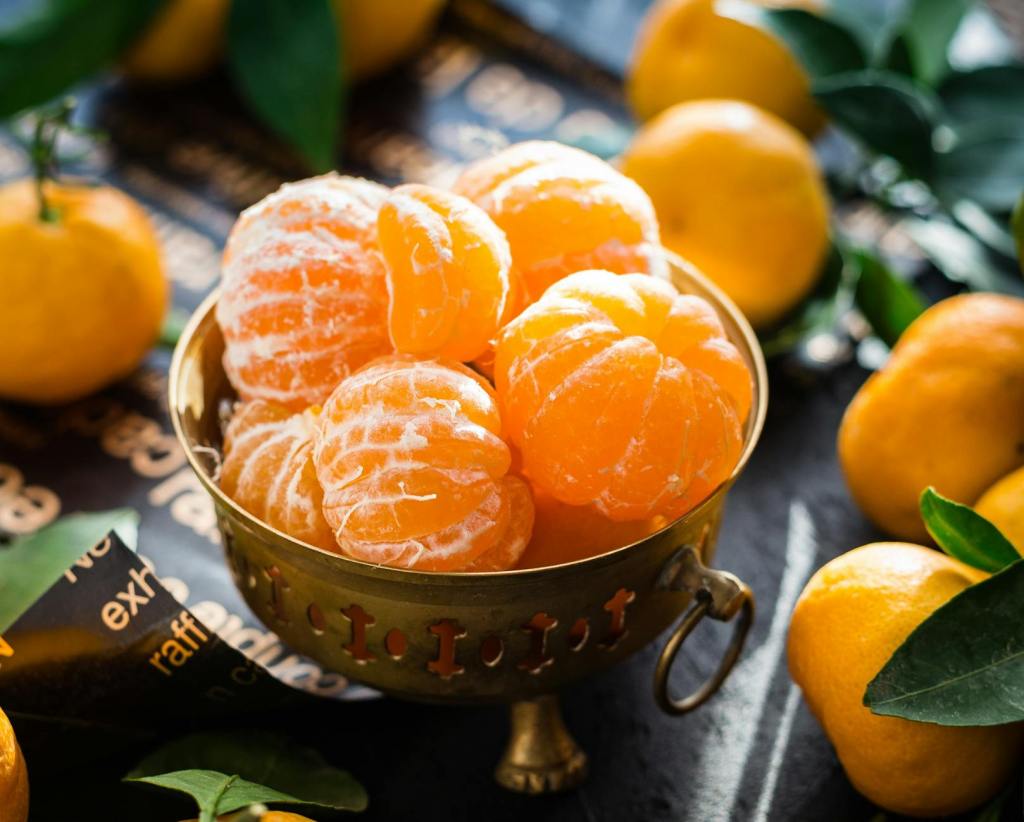
    I suggest the clementine as a gateway. Eat your clementine outside. Feel the sun on your face and shoulders. Peel it slowly. Take in the citrus burst. Bite in. No seeds. Just sweet, juicy goodness.

    I challenge you: eat a clementine in the sunshine after doing something a little physically hard—like running a race or walking with someone you love. Then tell me what, in that moment, could possibly be wrong in the world.

    Clementines are a hybrid between a mandarin orange and a sweet orange, named after Father Clement Rodier who grew the fruits in an Algerian garden.2

    But you don’t need to go to Algeria to get a clementine. Any number of grocery stores will gladly deliver a five-pound bag of clementines right to your door! What a time to be alive!

    Science: Clementine Gets the Gold Star

    I’ve been singing the praises of clementines for years (probably to the annoyance of whoever happens to be with me while I’m eating one). But a recent study validates my lived experience!

    Scientists report that women who ate a medium-sized orange every day had a 22% lower chance of depression.4

    This appears to be a real-deal, legitimate study — led by a scientist at Harvard Medical School who believes that eating oranges (and similar citrus, like clementines!) may increase levels of a beneficial gut bacteria that helps regulate mood.3

    This particular study was specific to citrus. But once you begin connecting with the immediate sensory experience of real, nourishing food, you don’t need a study to tell you what makes you feel good.

    Expand Your Circle of Joyful Food

    Try the Clementine Challenge with other foods like seeds, nuts (what would Father Clement say about cashews, or, heaven help us, macadamias!), seafood and leafy greens.

    Some of these foods take preparation. But the easiest preparation is also usually the most delicious. Look for recipes with a few, whole, staple ingredients. Use ChatGPT to help troubleshoot the execution. Once you get going, making real food can be easier than the processed alternatives.

    It may help to look up the history of these whole foods, like I did with the clementine above. Many have romantic or ancient origins and have nourished people for centuries, long before Nabisco started deconstructing corn and re-constructing it into food simulacrum.

    Processed Food Steals Joy

    Processed foods don’t just steal nutrients—they steal joy. They wreak havoc on your mood, hijack your hunger and flatten your palate.

    Parents know that sugary snacks can send kids bouncing off the walls, before the inevitable crash. Parents who want to have a good day today manage what their kids eat today.

    But somehow, as adults, we think we’ve risen above this basic cause and effect. We haven’t.

    The temptation is real: caffeine and sugar really do seem to make you think better, or at least faster! I spent too many years riding that roller-coaster and then wondering why I had a hair-trigger temper!

    And, processed foods can make us forget what real food tastes like. Designed to be soft, predictable and uniform – we lose the joy of biting into a perfectly ripe cherry, or the crunch of a great slice of homemade bread.5

    Five Small Changes with Big Impact

    1) Replace sugar with honey. Still sucrose, but it affects the body differently – and tastes better.6 Made by bees, not machines, good honey is the opposite of factory-uniform. The taste changes based on which flowers the bees were pollinating: clover, wildflowers, orange blossoms. Extraordinary! [I love honey so much that I wrote a whole post about it here in my companion blog, Not Your Fiat Life.]


    2) Pair sweet foods with protein and vegetables. Your body reacts better when sweetness is balanced.7


    3) Upgrade your comfort food. My upgrade to boxed mac-and-cheese? Pasta, real butter, sharp cheddar, and some spinach or peas. Still indulgent—but satisfying, not flattening.


    4) Get coffee right. Expensive coffees from the fancy coffee shop can have more sugar than a soda. My ritual is black coffee8 in the morning and espresso with homemade cashew milk in the afternoon. Half a cup of cashews, 2 cups water, and one loud blender. In five minutes you have delicious, rich, cashew milk that is no comparison to watered-down store-bought versions. Adding a drop of honey, maple syrup or vanilla extract turns it into a treat.


    5) Use the Hedonic Treadmill to your advantage. Novelty and intelligent, temporary and limited deprivation can increase your joy. I’m personally happiest when I’m doing a 16:8 intermittent fast. Even carrot sticks taste so sweet when they break a morning fast!

    Good Things Ricochet

    Here’s the most beautiful part. Eating for mental health doesn’t just help you. It radiates outward.

    Preparing simple, joyful food saves time, money, and energy. It makes you sharper, steadier, and more present in your work and relationships. It builds community—because nothing brings people together like good food.

    You don’t have to be perfect. Everyone needs an Oreo now and then. But small changes, made with intention, can echo through your life in surprising and powerful ways. This is a rule of the universe: Good things ricochet.

    Footnotes

    ¹ Drew Ramsey, Eat to Beat Depression and Anxiety, Harper Wave, 2021, p. 52.

    ² This story about the origin of the name of the clementine comes from Wikipedia. And if Wikipedia is “good enough” for Judge Posner, it is certainly good enough for me. United States v. Bazaldua, 506 F.3d 671 (7th Cir. 2007) (noting that Wikipedia is often “good enough” for general background).

    ³ Can an orange a day keep depression away?” — interview with Dr. Raaj Mehta, Harvard Gazette, Feb 21, 2025. ~Read the interview.

    See, e.g., Mehta, R., et al. Citrus intake and its components are prospectively associated with a lower risk of depression and altered abundance of 15 gut microbial species. Microbiome, Nov 2024. ~View study on PubMed~

    ⁵ Even our teeth have changed! In Ultra-processed People, Chris Val Tullekin explains that many modern dental problems are caused by underdeveloped jaws from eating too much soft food.

    See, e.g., Shambaugh, P., Worthington, V., & Herbert, J. “Differential effects of honey, sucrose and fructose on blood sugar levels.” Journal of Manipulative and Physiological Therapeutics, 1991;14(2):91–95. ~View study on PubMed~ .

    See, e.g., American Diabetes Association, “How Does Food Impact Blood Glucose?” Diabetes Food Hub, https://diabetesfoodhub.org/blog/how-does-food-impact-blood-glucose.html
    (“Fiber, fat, and protein help slow digestion and absorption of glucose from carbohydrate foods, so your blood glucose will rise more slowly after a meal.”); Joslin Diabetes Center, “Effects of Carbs, Protein and Fats on Glucose Levels,” https://joslin.org/news-stories/all-news-stories/education/2021/07/carbs-protein-fats
    (“Fiber, protein and fats help to slow down the digestion of carbs and delay their absorption into the blood. This helps to prevent spikes in glucose levels after eating.”).

    ⁸ I used to be a soda junky. Now I’m just as serious about my coffee. I hand grind my beans every morning and use an inverted Aeropress to make the smoothest cup of black coffee you’ve ever tasted.

  • Rewired for Joy:                          How Interest-Driven People Can Learn to Love What is Good for Them

    Rewired for Joy: How Interest-Driven People Can Learn to Love What is Good for Them

    I’ve always been jealous of disciplined people who do hard things just because it’s time to do them.

    My sister is like that. As kids, she practiced the piano every day, exactly as our teacher assigned. I was all over the place — three hours, then nothing for days. Discipline didn’t come naturally to me. My teachers said I was smart, but I struggled to stay present with the lesson at hand. I was caught up in daydreams. On another planet. A few decades later, someone might have called it ADHD.¹

    As a kid, I thought I’d never be able to keep up—let alone thrive in the world.

    I knew I needed more than a schedule or a rule to do the hard thing. I needed a reason. Something joyful. Something interesting. And that need has shaped how I approach everything I care about.

    I started tricking myself into wanting to do the things I was supposed to do.

    I learned to cultivate motivation by highlighting the best parts of a task, noticing the pleasure in it, even exaggerating it to myself until the task became something I wanted to do.

    At school, everything changed once I figured out how to enjoy reading, writing, and learning. I went from barely surviving middle school to thriving at a top law school.

    I studied harder and worked harder because I loved the process of thinking through challenging problems. My “superpower” was that I cared more than anybody else. That engagement carried me farther than discipline alone ever could.

    Learning how to want what’s good for me didn’t just make life easier—it made my life possible. And this mindset didn’t just save me in school or work. It became the foundation for how I live—how I eat, how I move, how I build wealth, and how I stay free.

    You can use the same approach to learn to love movement, strength training, or eating well. Our bodies and minds are primed to enjoy those things. That great feeling after a few minutes on a treadmill or a walk around the block is your body rewarding you for doing what it was built to do.

    And it works just as well for money.

    This joy-first mindset helped me build a financially lean life—grounded in gratitude, rooted in sufficiency, and free from the dopamine hits of consumer culture. I learned to savor the feeling of being able to do it myself, or make it myself, and the lightness of needing less.

    A rich life isn’t built on more stuff. It’s built on things like time, freedom, self-reliance and creativity.

    Typical advice—”work out at the same time every day, track every expense, follow the plan”—just sounded so boring. For me, healthy habits, like anything else, need to be rooted in joy. In love, even.

    I used my old trick and found a way to love what I needed.

    Want to learn to love what’s good for you? Start by noticing what already feels good. The way your breath steadies. The rush of air. The brightness after a clean meal. The freedom of knowing you don’t need much.

    Catch that moment. Build on it. That’s how it begins.

    In other posts, I share tips for how busy people can learn to love moving, getting stronger, eating well — and living below their means without feeling deprived. Subscribe here to get the latest posts.

    I also run a companion blog, Not Your Fiat LIfe, which provides a space to practice appreciation. Click here to subscribe to Not Your Fiat Life.


    Footnotes

    ¹ Some “undisciplined” or “lazy” kids are just interest-driven learners — a pattern reportedly seen in ADHD, particularly in girls. Source.

    A tangent for people with ADHD-type minds — and their parents:
    Another thing made a huge difference for me. I never would have made it through law school or a legal career without it.

    I developed a strange little habit: flipping the tassel end of a bookmark over the page as I read. I still do it — much to the annoyance of anyone who’s ever officed next to me. It’s rhythmic, soothing, and essential. I do my “bookmark thing” when I’m reading on a screen, talking on the phone, writing emails — even writing this blog post.

    Without it, I cannot focus.

    Maybe it was the original fidget spinner!