
I wore a continuous glucose monitor for 30 days to see how my body actually responded to the way I eat. I wondered whether the glucose readings would match my experience of what makes for a healthy diet, as outlined here and here.
Wearing a continuous glucose monitor gave me a real-time look at how different foods, habits, and routines affected my blood sugar levels. The results were far more stark than I expected.
- Homemade food is simply far better. Measured solely by my glucose readings, there was a profound difference between the espresso with homemade cashew milk and honey I make at home, and the “syrup pump” coffee I buy when I’m out.
- Healthy habits matter. Even tiny tweaks like walking, cleaning up after dinner, or starting a meal with lean protein seemed to offset the impact of carbs and sugar on my glucose readings.
- Building healthy scaffolding is better than chasing perfection. Ultimately, the scaffolding mattered more than a perfect diet. When the right conditions were in place, even sugary foods didn’t throw me off. Under the wrong conditions, deviations could impact my whole day.
Perhaps most importantly, the experience underscored a central thesis of this blog: that food has a powerful immediate impact on well-being, and that a healthy lifestyle feels better in the short term.
Read on for more specifics.
The Set Up
Glucose is energy. It’s what our bodies use to write a brief, take a walk with friends, or work in the garden. But the body’s system for processing glucose can break. And we can break it. When that happens, glucose can spike more quickly and more often than it should.
Continuous Glucose Monitors (“CGMs”) let you watch your glucose readings change as you eat, drink, move, and rest. You can buy a CGM without a prescription from lots of different providers. I bought mine from Lingo, which offered a tracker and a month of monitoring through a smartphone app for $89.
Lessons Learned
Reading books and articles about trial prep can never substitute for the experience of actually going through trial. Actually seeing the impact of what I was eating and drinking in real time was similarly powerful.
Here’s what I learned.
Unprocessed food is better.
The biggest takeaway was the power of unprocessed, whole or homemade food. It seemed almost impossible to spike my glucose from overeating even high carb or sweet unprocessed foods, like my homemade yogurt or homemade flatbread.
Homemade food has two advantages:
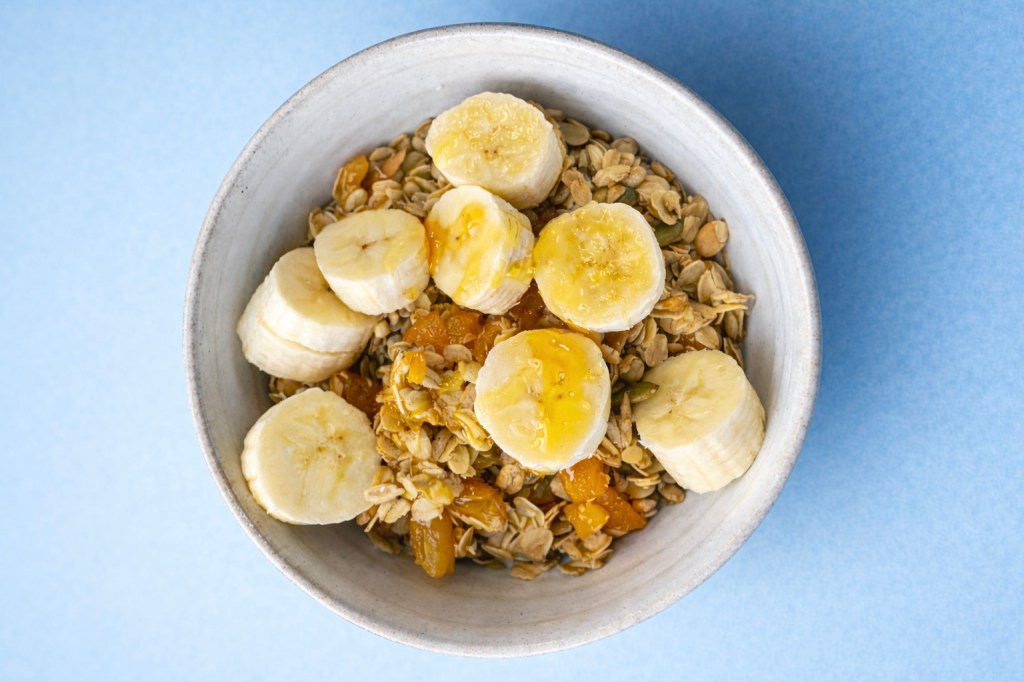
- Less sugar: I add plenty of honey to my homemade yogurt, plus sweet homemade granola, dried fruit, and bananas! But all that doesn’t come close to the sugar you’d find in a carton of fruit-flavored yogurt topped with commercial granola. Yes, you can get store-bought yogurt that doesn’t have added sugar. But it’s hard to stick to eating that because it isn’t nearly as delicious or fulfilling as my homemade yogurt.
- More friction: If I want another piece of flatbread, I can’t just take it out of the package. I’ve got to roll out the dough and cook it. That only takes a few minutes. But the small friction means I can’t mindlessly overeat.
On the other hand, it was easy to spike my glucose with processed foods.
Sugary drinks were, hands down, the worst for spiking glucose.
Even the smallest size drive-through coffee with commercially sweetened almond milk and chocolate syrup on an empty stomach was the perfect storm for a glucose spike.
My worst day for glucose spikes was when I went with friends to a brew festival. Instead of alcohol I opted for what I thought was the healthiest option: a fruit smoothie. My glucose was through the roof. And I didn’t need the monitor to tell me that. I felt absolutely awful.
That’s no real shock in this when you think about it. I’m sure the smoothie vendor (a big national chain) added plenty of sugar. And blending breaks down the structure of the fruit, if they even started with real fruit.
Healthy habits matter.
My body’s surprising resilience to homemade sweets and carbs seemed to have as much to do with the conditions in place as with what I was eating. Remarkably, under the right conditions, even homemade cherry cobbler—made with a cup of pure sugar, all-purpose flour, and sweet cherries—did not spike my glucose.
Three healthy habits seemed to have the power to reshape my body’s response to sugary or high carb foods.
— Protein first. Eating protein first—eggs before bread—seemed to almost completely blunt the impact of moderate carbs and sweets. The custom of eating dessert last makes sense, as do “macro” diets emphasizing balancing protein, carbs and fat.
— Activity after. A short burst of light activity after eating seemed to mitigate the impact of carbs and sweets. I’d see my glucose levels go down in real time as my body seemed to start using some of the glucose I’d just introduced. Even taking a short walk or bustling around cleaning my kitchen after a meal seemed to create enough activity to impact my glucose readings. This was an added benefit to making my own food.
— Starting the day healthy. My body seemed most sensitive to glucose on an empty stomach. That made the first meal of the day more important. Both of my worst spikes—the drive-through coffee and the smoothie—came when I introduced lots of sugar and carbs on an empty stomach. And in each instance, my glucose seemed to spike more easily for the rest of the day.
Overall, I was shocked at how few spikes I had when I wore the monitor, and deeply grateful to my body for its ability to properly process glucose. I suspect this is due to one core healthy habit: the amount of muscle I’ve developed in the last six years or so since I started strength training in earnest. Research supports that muscle plays a role in regulating glucose.1 My experience was consistent with the notion that muscles operate as a glucose “sink,” but I’m hoping I’ll never lose enough muscle to be able to properly test it on myself!
Scaffolding is more important than perfection.
Maximizers love elimination diets: No refined sugar, no carbs except vegetables, cut out all packaged food. At times in my life, I’ve forced myself to stick to some clearly defined “healthy” measure like that. Then, I’d get busy and start making “mistakes.” Once I “failed” in the diet, I felt I might as well throw it all out the window. And did.
My experience with the CGM suggests hard-to-maintain perfection-based diets create more glucose swings.
At least as far as glucose is concerned, a steady “basically healthy” scaffolding seems better than cycling between perfection and defeat. When I had the right basic habits in place—starting with protein, ending with light activity—even cherry cobbler didn’t throw my glucose out of whack. I could maintain that general scaffolding for a long time.
And, critically, sometimes even big deviations didn’t undermine my entire approach. There was no reason to scrap my plans if I couldn’t be perfect.
The modern lifestyle pushes us to outsource food preparation by drinking drive-through coffee, eating processed food, and driving to sit-down meals at restaurants. Removing our own labor from the process means we’re less active before and after meals, and makes it easier to overeat. Market pressures mean sugar often becomes a low-cost substitute for real care. All of this creates a perfect storm for glucose spikes.
Hope and Joy
But there’s a lot of hope here!
Making good food, moving my body, and eating mostly healthy foods feels great. Those are creative, life-affirming endeavors. The things that spiked my glucose made me feel bad, were more expensive, and offered no creative bonus. I didn’t need to beat myself up or exercise profound willpower to keep my glucose levels in check. What worked was putting in place a healthy, life-affirming scaffolding.
Wearing the CGM also helped my mood. As a maximizer, I absolutely wanted to keep my glucose spike “score” as low as possible. I found myself reducing the sugary foods that didn’t add to my day in other ways. I know how powerful eating right can be for getting my joy back. A CGM could be a tool to help me reset when I’m feeling down.
There is a warning for maximizers in this too. After my first “zero spike” day I longed to prove I could do it again. And again.
But glucose is literally what powers our lives. Our bodies are built to take in food, produce glucose, and use it to live. Glucose spikes are part of living. You might even say they are living. The key is not figuring out how to maximize a score on an app. The key, as in most things, is to maximize for living well.
 The Fully Invested Lawyer
Leave a comment